
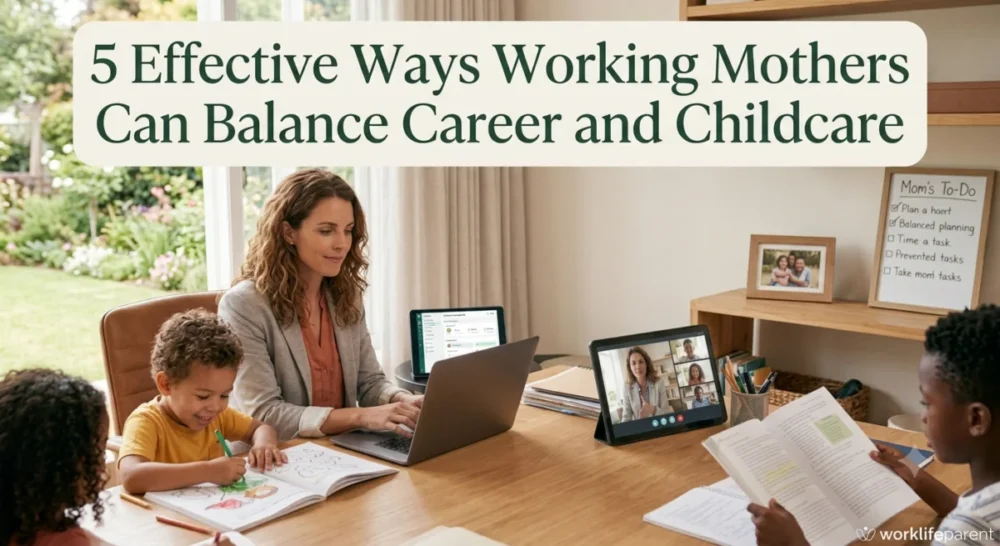
How Working Mothers Can Balance Career Success and Raising Children
Building a successful career while raising children is one of the biggest challenges many parents face today. For working mothers especially, balancing professional responsibilities with the emotional and practical needs of their children can often feel overwhelming.
Many women find themselves caught between two important roles: being present for their children and maintaining their professional goals. The pressure becomes even greater when childcare costs are high, workplace flexibility is limited, and family responsibilities continue to grow.
Economic challenges and major global events have made this struggle more visible. Many mothers have reconsidered their careers because of difficulties finding affordable childcare or managing work alongside family life.
However, achieving balance does not mean becoming perfect at everything. It means creating a realistic approach that allows mothers to care for their children while continuing to grow professionally.
This guide explores five practical strategies that can help working mothers manage both career and parenting responsibilities without sacrificing their personal goals.
Why Is Balancing Work and Parenting So Difficult?
Modern working mothers face several challenges that go beyond simply managing time.
Understanding these challenges is the first step toward finding better solutions.
1. Transition Challenges
Major life changes often require adjustment.
Examples include:
- Returning to work after maternity leave
- Starting a new job after having children
- Adjusting to a child’s first years at school
- Managing changes in family routines
These transitions can create emotional stress as mothers adapt to new responsibilities.
2. Daily Practical Challenges
Working parents often have to coordinate multiple responsibilities at the same time.
A typical day may involve:
- Completing work tasks
- Preparing meals
- Managing school schedules
- Attending appointments
- Supporting children’s emotional needs
Without proper planning, these responsibilities can quickly lead to exhaustion.
3. Lack of Workplace Flexibility
A flexible workplace can make a significant difference for parents.
Some companies allow employees to:
- Adjust working hours
- Work remotely
- Use hybrid schedules
- Focus on results instead of strict attendance
However, many workplaces still maintain rigid systems that make parenting responsibilities more difficult.
look: 5 Effective Ways Working Mothers Can Balance Career and Childcare
4. Emotional Pressure and Fear
Many working mothers experience anxiety about whether they are doing enough.
Common concerns include:
- “Am I spending enough time with my children?”
- “Am I performing well enough at work?”
- “Am I missing important moments?”
This emotional pressure can create unnecessary guilt.
5. Identity and Personal Priorities
Motherhood often changes how women view themselves.
Some mothers struggle with questions such as:
- Who am I beyond being a parent?
- Should I prioritize my career or my family?
- Can I succeed in both areas?
Finding balance requires recognizing that professional success and motherhood can exist together.
The Key to Success: Stop Trying to Be a Perfect Mother
One of the biggest mistakes many working mothers make is believing they must do everything perfectly.
The reality is that perfection is impossible.
A child does not need a parent who never makes mistakes. Children need parents who provide love, stability, and emotional support.
A balanced mother is not someone who spends every moment with her children or someone who dedicates all her energy to work.
A balanced mother understands her limits and creates a healthy rhythm between personal, family, and professional responsibilities.
Feelings of guilt are common, but constantly blaming yourself does not improve your relationship with your children.
Instead of asking:
“Am I doing everything perfectly?”
Ask:
“Am I creating meaningful moments with my child while taking care of myself?”
5 Practical Ways Working Mothers Can Balance Career and Parenting
1. Choose Realistic Goals Instead of Chasing Perfection
Successful work-life balance begins with realistic expectations.
Many mothers feel pressure to be the perfect employee, perfect parent, and perfect partner at the same time.
This unrealistic standard often leads to stress and burnout.
Instead:
- Accept that some days will be difficult
- Focus on what matters most
- Prioritize important tasks
- Give yourself permission to rest
Being a good mother does not mean sacrificing your entire identity. A healthy parent is also someone who takes care of herself.
2. Consider Remote or Hybrid Work Options
Work flexibility has become one of the most valuable benefits for modern families.
Remote and hybrid work arrangements can help parents manage responsibilities more effectively by reducing commuting time and allowing greater control over daily schedules.
A flexible employer may allow:
- Working from home several days a week
- Adjusting start and finish times
- Managing tasks based on results rather than hours
However, working remotely also requires clear boundaries.
Parents working from home should create routines that separate professional responsibilities from family time.
Helpful strategies include:
- Having a dedicated workspace
- Creating clear working hours
- Communicating expectations with family members
The goal is not to work constantly from home, but to create a healthier balance.
3. Build a Strong Support System
No parent should feel that they must handle everything alone.
Family support can make a major difference during stressful periods.
Talking with trusted people can help mothers discover solutions they may not have considered.
Support may come from:
- A spouse or partner
- Grandparents
- Relatives
- Close friends
- Professional childcare services
Before making major career decisions, such as leaving a job, discuss your situation with people who understand your circumstances.
Leaving the workforce completely may create financial challenges and make returning to a career more difficult later.
If a break becomes necessary, temporary options such as unpaid leave or reduced hours may sometimes be better alternatives than permanently resigning.
4. Use Technology to Stay Connected With Your Children
Many working mothers worry that busy schedules prevent them from being involved enough in their children’s daily lives.
However, being present does not always require being physically available every moment.
Technology can help parents stay connected and involved even during busy workdays.
Useful examples include:
- Checking school updates through online platforms
- Communicating with teachers by email
- Following homework assignments digitally
- Sharing short messages with children during the day
- Using video calls when away for longer periods
Technology can also help mothers stay aware of important events, school activities, and their children’s progress.
However, technology should support family connection—not replace real interaction.
The most meaningful conversations still happen through direct communication, shared activities, and quality time together.
5. Focus on Quality Time, Not Just the Amount of Time
One of the biggest misconceptions among working parents is that children only benefit from spending long hours with their parents.
In reality, the quality of the interaction often matters more than the number of hours spent together.
A mother who spends two focused, loving hours with her child may create stronger memories than someone who spends an entire day together while distracted.
Children remember:
- Feeling listened to
- Feeling loved
- Sharing experiences
- Receiving attention
Simple family activities can create powerful connections, including:
Family Meals
Eating together provides an opportunity to talk about the day, share stories, and strengthen family bonds.
Watching a Favorite Show Together
A simple movie or television night can become a meaningful family tradition.
Outdoor Activities
Walking, visiting parks, or exploring new places together allows families to relax and connect away from daily responsibilities.
The goal is not to create expensive experiences. It is to create moments where children feel important and valued.
Creating a Healthy Routine Between Work and Family
A balanced lifestyle does not happen automatically. It requires planning and intentional choices.
Working mothers can create healthier routines by:
Setting Priorities
Not every task has the same importance.
Focus your energy on activities that truly affect your family and career.
Creating Boundaries
Avoid allowing work responsibilities to completely take over family time.
Whenever possible:
- Finish work at a specific time
- Reduce unnecessary interruptions
- Create technology-free family moments
Sharing Responsibilities
Parenting should not be the responsibility of one person alone.
Partners and family members can contribute by sharing:
- Household tasks
- Childcare duties
- Planning responsibilities
A supportive family environment benefits everyone.
Personal Experience: Learning That Balance Is About Presence, Not Perfection
When I first returned to work after becoming a mother, I believed I had to prove that I could handle everything perfectly. I wanted to be an excellent employee while also making sure my child never felt that work came before family.
At first, I tried to do everything alone. I answered work emails late at night, managed every household responsibility, and constantly worried that I was failing in one area or another.
Eventually, I realized that this approach was exhausting me and affecting the quality of the time I spent with my child.
I began making small changes. I started planning my week more carefully, asking for help when needed, and creating moments where my attention was completely focused on my child. Even a short evening conversation or reading a bedtime story became something I valued deeply.
I also learned to stop measuring my success by the number of hours I spent with my child. Instead, I focused on whether those moments were meaningful.
The biggest lesson I learned was that children do not need a parent who is available every second. They need a parent who makes them feel loved, secure, and important.
Balancing work and motherhood is not about achieving perfection. It is about creating a lifestyle where both your family and your personal goals can grow together.
Common Mistakes Working Mothers Should Avoid
Even with the best intentions, some habits can make balancing work and parenting more difficult.
1. Trying to Do Everything Alone
Many mothers hesitate to ask for help because they believe they should manage everything themselves.
However, accepting support is not a sign of weakness. It is a practical way to protect your energy and maintain a healthier family life.
2. Feeling Constant Guilt
Guilt is one of the biggest emotional challenges for working mothers.
Feeling guilty about working does not mean you are a bad parent.
Children can benefit from seeing their mothers pursue goals, develop skills, and maintain a sense of personal identity.
3. Sacrificing Personal Well-Being
A tired and overwhelmed parent may struggle to provide emotional support.
Self-care is not selfish.
Taking time for rest, health, and personal interests helps mothers become more patient and emotionally available.
4. Ignoring Communication With Children
Busy schedules can sometimes reduce meaningful conversations.
Even short daily discussions help children feel connected.
Ask about:
- Their feelings
- Their favorite moments
- Their worries
- Their interests
5. Comparing Your Family Situation With Others
Every family has different circumstances.
Comparing your lifestyle, career, or parenting choices with another family often creates unnecessary pressure.
The best approach is finding what works for your own children and your own situation.
The Importance of a Supportive Workplace
Companies also play an important role in helping parents succeed.
Workplaces that support families often experience:
- Higher employee satisfaction
- Better retention
- Stronger loyalty
- Improved productivity
Helpful workplace policies include:
- Flexible schedules
- Remote work options
- Parental leave
- Understanding management
When employers recognize that employees have responsibilities outside work, both workers and organizations benefit.
Final Thoughts
Balancing work and raising children is challenging, but it is possible with realistic expectations, strong support, and thoughtful planning.
Working mothers do not have to choose between being successful professionals and loving parents.
The key is finding a balance that allows children to feel supported while mothers continue pursuing their ambitions.
Remember, children do not measure love by the amount of time parents spend with them alone. They remember the attention, kindness, conversations, and emotional connection they receive.
A successful mother is not one who does everything perfectly. She is one who creates a loving environment where both she and her children can grow.
Frequently Asked Questions (FAQs)
1. How can working mothers balance their careers and raising children?
Working mothers can achieve better balance by setting realistic expectations, creating flexible routines, sharing responsibilities, and focusing on meaningful time with their children rather than trying to be perfect.
2. Is working full-time harmful to children?
No. Working parents can raise happy and healthy children when they provide emotional support, attention, and a stable environment. The quality of the relationship matters more than whether a parent works outside the home.
3. How can mothers reduce guilt about working?
Mothers can reduce guilt by recognizing that providing financial stability, pursuing personal goals, and maintaining a career can also benefit children. A happy and fulfilled parent often creates a healthier family environment.
4. Is remote work better for working mothers?
Remote work can provide greater flexibility, but it is not always the perfect solution. Success depends on having clear boundaries, proper scheduling, and the ability to separate work responsibilities from family time.
5. What is the most important thing children need from working parents?
Children mainly need love, security, attention, and emotional connection. Even limited time can have a powerful impact when parents are fully present and engaged during those moments.