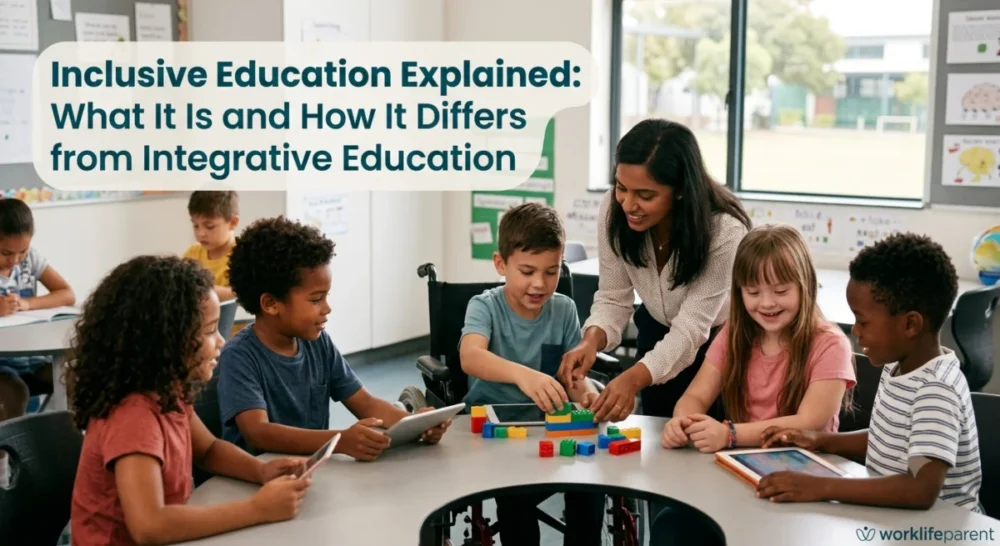
Inclusive Education Explained: What It Is and How It Differs from Integrative Education
Education is most effective when every child has an equal opportunity to learn, participate, and succeed. Over the past decade, schools around the world have increasingly embraced inclusive education, recognizing that students thrive when they learn together regardless of their abilities or individual challenges.
Despite its growing importance, many people still confuse inclusive education with integrative education. Although both approaches aim to improve learning outcomes, they serve different purposes and follow distinct educational philosophies.
This guide explains what inclusive education is, its main objectives, how it works in schools, and the key differences between inclusive and integrative education.
What Is Inclusive Education?
Inclusive education is an educational approach that ensures all children—including students with disabilities, learning difficulties, or other special educational needs—learn together in mainstream classrooms alongside their peers.
Instead of expecting students to adapt to a rigid educational system, inclusive education encourages schools to adapt their teaching methods, learning environments, and resources so every student has an equal opportunity to participate and succeed.
The goal is not simply to place children with disabilities in regular classrooms but to create an environment where every learner feels valued, supported, and included.
Why Inclusive Education Matters
Inclusive education benefits both students with special educational needs and their classmates.
Some of its most important advantages include:
- Promoting equal access to quality education
- Reducing discrimination and social exclusion
- Building confidence and independence
- Encouraging empathy and respect among students
- Improving collaboration and communication skills
- Preparing children for diverse communities and workplaces
By learning together from an early age, children naturally develop greater acceptance of individual differences.
Core Principles of Inclusive Education
Equal Educational Opportunities
Every child has the right to receive quality education regardless of physical, intellectual, sensory, or developmental differences.
Inclusive schools work to remove barriers that prevent students from fully participating in classroom activities.
look: The Ultimate Guide to Raising Emotionally Intelligent Kids
Adapting Education to the Student
Inclusive education shifts responsibility from the learner to the educational system.
Rather than expecting every child to learn in the same way, teachers adapt instruction, classroom activities, and assessments to match individual learning needs.
Social Inclusion
Learning together helps children develop meaningful friendships while reducing isolation and stigma often experienced by students with disabilities.
An inclusive classroom encourages every child to feel accepted and respected.
Celebrating Diversity
Differences are viewed as strengths rather than obstacles.
Students learn to appreciate varying perspectives, abilities, and experiences, creating a richer learning environment for everyone.
How Inclusive Education Is Implemented
Successfully implementing inclusive education requires commitment from schools, teachers, parents, and policymakers.
Adapting the Curriculum
Lessons should be flexible enough to accommodate different learning styles and abilities.
This may include:
- Simplified learning materials
- Alternative assessment methods
- Individual learning goals
- Assistive learning technologies
Training Teachers
Professional development plays a critical role.
Teachers benefit from training in:
- Differentiated instruction
- Classroom management
- Supporting students with disabilities
- Collaborative teaching practices
- Inclusive assessment strategies
Improving School Accessibility
Schools should ensure that every student can safely access classrooms and facilities.
Examples include:
- Wheelchair ramps
- Elevators
- Accessible restrooms
- Braille materials
- Screen readers
- Hearing assistance technology
Providing Resource Rooms and Specialized Support
Many inclusive schools establish resource rooms where students receive individualized support without being separated from their classmates for the entire school day.
These services may include:
- Speech therapy
- Occupational therapy
- Learning support
- Individual academic interventions
My Experience Supporting Inclusive Learning
When my daughter started elementary school, one of her classmates had autism. At first, I wasn’t sure how the classroom would function or whether the teacher would be able to meet everyone’s needs. Like many parents, I assumed the child might struggle socially or academically.
Within a few months, my perspective completely changed.
The teacher made inclusion feel natural rather than forced. She adjusted classroom activities so every student could participate at their own level, encouraged teamwork, and openly discussed kindness and respect without singling anyone out.
My daughter began telling me stories about helping her classmate during group projects and celebrating his achievements just as enthusiastically as anyone else’s. What surprised me most was how much all the children benefited. They became more patient, understanding, and supportive of one another.
Watching this unfold made me realize that inclusive education isn’t only about helping children with disabilities. It’s about teaching every child how to live in a diverse world. The friendships that formed in that classroom showed me that when schools remove barriers instead of creating them, every student grows—not only academically but emotionally and socially as well.
Inclusive Education vs. Integrative Education
Although the two terms are often used interchangeably, they describe different educational concepts.
What Is Integrative Education?
Integrative education focuses on how students learn rather than who is learning.
Its primary objective is to help learners actively build knowledge and develop competencies through problem-solving, collaboration, and real-life learning experiences.
Students are encouraged to think critically, work in teams, and apply classroom knowledge to practical situations.
This approach benefits all learners regardless of their abilities.
Key Differences Between Inclusive and Integrative Education
| Integrative Education | Inclusive Education |
|---|---|
| Focuses on active learning and competency development | Focuses on equal educational access for students with disabilities and special educational needs |
| Applies to all students | Primarily supports students with additional learning needs while benefiting the whole class |
| Encourages learner-centered teaching | Removes barriers to participation and learning |
| Develops practical skills and knowledge | Creates an accessible and supportive learning environment |
| Improves teaching quality | Promotes equality, diversity, and social inclusion |
Which Educational Approach Is Better?
Neither approach replaces the other.
In fact, the strongest educational systems combine both.
An inclusive school can simultaneously use integrative teaching methods, allowing every student to participate actively while ensuring children with disabilities receive the accommodations and support they need.
Together, these approaches create classrooms that are both accessible and engaging.
Inclusive education represents more than simply placing students with disabilities into mainstream classrooms. It is a commitment to ensuring every child has the opportunity to learn, participate, and feel valued within the school community.
At the same time, integrative education enhances the learning process by encouraging active participation, critical thinking, and real-world problem-solving for all students.
When schools embrace both philosophies, they create environments where diversity becomes a strength, learning becomes more meaningful, and every child has the opportunity to reach their full potential.
Frequently Asked Questions
1. What is the main goal of inclusive education?
The primary goal of inclusive education is to ensure that every child, including those with disabilities or special educational needs, has equal access to quality education within mainstream schools while receiving the support necessary to succeed.
2. Who benefits from inclusive education?
Everyone benefits. Students with disabilities receive equal learning opportunities, while their classmates develop empathy, cooperation, respect for diversity, and stronger social skills.
3. What is the difference between inclusive education and integrative education?
Inclusive education focuses on providing equal educational opportunities and removing barriers for students with special educational needs. Integrative education focuses on improving how all students learn through active participation, competency development, and practical learning experiences.
4. What challenges do schools face when implementing inclusive education?
Common challenges include limited teacher training, insufficient funding, lack of accessible facilities, inadequate learning resources, and the need for ongoing collaboration between educators, families, and specialists.
5. Why is teacher training important in inclusive education?
Well-trained teachers can adapt lessons, manage diverse classrooms effectively, use differentiated instruction, and provide appropriate support that enables every student to participate and succeed.