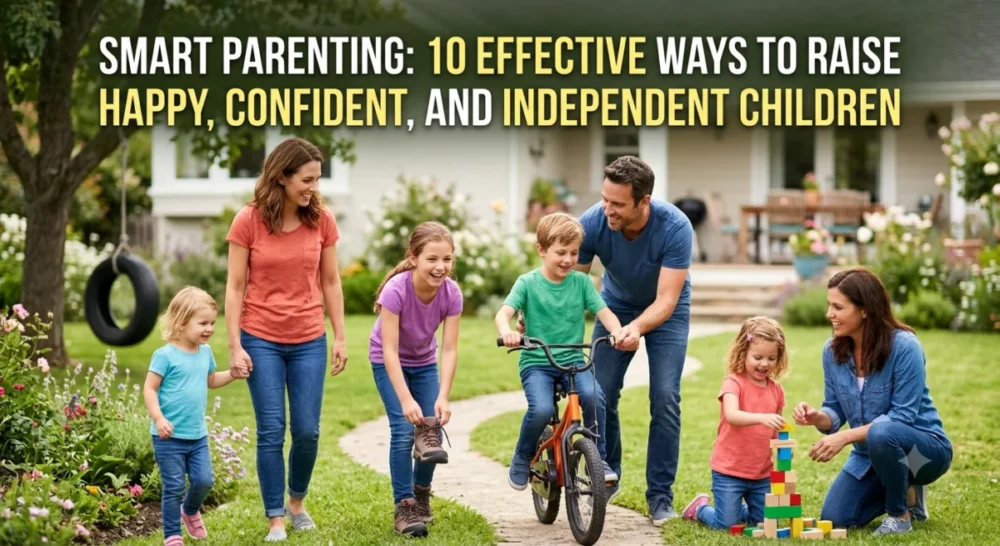
Smart Parenting: A Better Way to Raise Confident and Happy Children
Parenting has always been one of life’s greatest responsibilities, but raising children in today’s fast-changing world presents challenges that previous generations rarely faced. Technology, social media, academic pressure, and busy family schedules all influence how children think, behave, and interact with others.
Because of these changes, many parents are moving away from traditional parenting methods based on strict control and punishment. Instead, they are embracing smart parenting—an approach that focuses on understanding children, building trust, encouraging independence, and supporting healthy emotional development.
Smart parenting doesn’t mean allowing children to do whatever they want. Rather, it means guiding them with patience, respect, and consistency while helping them develop the confidence and life skills they’ll need as they grow.
This guide explains what smart parenting is, why it works, and the practical strategies every parent can use to raise emotionally healthy, responsible, and self-confident children.
What Is Smart Parenting?
Smart parenting is a child-centered approach that supports every aspect of a child’s development rather than focusing only on discipline or academic success.
It recognizes that children grow in several important areas, including:
- Physical development
- Motor skills
- Cognitive growth
- Language and communication
- Social development
- Emotional well-being
Instead of expecting children to fit into rigid rules, smart parenting encourages parents to understand each child’s personality, strengths, and pace of development.
The goal is to raise children who are capable of making good decisions, solving problems independently, expressing emotions in healthy ways, and building positive relationships throughout life.
look: Inclusive Education Explained: What It Is and How It Differs from Integrative Education
Why Smart Parenting Is So Effective
Children learn best when they feel safe, respected, and understood.
Smart parenting creates a supportive environment where children are encouraged to explore, ask questions, make mistakes, and learn from their experiences.
Some of the biggest benefits include:
- Stronger parent-child relationships
- Better emotional intelligence
- Increased self-confidence
- Greater independence
- Improved communication skills
- Better problem-solving abilities
- Reduced behavioral conflicts
- Higher resilience when facing challenges
Rather than relying on fear or punishment, smart parenting teaches children how to think, not simply what to think.
1. Listen Carefully and Make Your Child Feel Heard
One of the simplest yet most powerful parenting habits is learning to listen.
Children quickly notice whether adults genuinely pay attention to their thoughts or simply wait for them to stop talking.
Whenever your child shares an idea, concern, excitement, or disappointment, give them your attention. Even if you cannot immediately solve the problem, listening without judgment helps children feel valued and respected.
When children know their feelings matter, they become more comfortable expressing themselves instead of hiding their emotions.
Helpful listening habits include:
- Making eye contact
- Avoiding interruptions
- Asking gentle follow-up questions
- Acknowledging their feelings
- Remaining calm during emotional conversations
A child who feels heard develops stronger trust in their parents and becomes more willing to seek guidance during difficult moments.
2. Never Compare Your Child with Others
Every child develops at a different pace.
Some children learn languages quickly, while others excel in sports, music, creativity, or problem-solving.
Comparing siblings or classmates may seem harmless, but repeated comparisons often damage self-esteem and create unnecessary competition.
Instead of saying:
“Why can’t you be more like your brother?”
Try saying:
“Let’s work together to improve your own progress.”
Celebrate your child’s individual strengths while supporting areas where they need encouragement.
Children who are appreciated for who they are become far more motivated than children who constantly feel measured against someone else.
3. Create a Safe and Emotionally Secure Environment
Smart parenting focuses on guidance rather than control.
Children should never question whether they are loved because of a mistake they made.
Emotional security comes from knowing that parents remain supportive during both successes and failures.
This doesn’t mean accepting poor behavior without consequences. It means separating the child’s behavior from their worth as a person.
Children who feel emotionally secure are more likely to:
- Build healthy friendships
- Manage stress effectively
- Recover from setbacks
- Develop higher self-esteem
- Face new experiences with confidence
Unconditional love provides the foundation for lifelong emotional resilience.
4. Build a Strong Relationship Every Day
Children don’t measure love by expensive gifts.
They measure it through attention, affection, and meaningful moments together.
Building a strong relationship doesn’t always require hours of free time.
Simple daily habits can make a lasting difference, including:
- Reading together before bedtime
- Sharing meals without distractions
- Talking during car rides
- Helping with homework
- Cooking together
- Laughing and telling stories
Small moments repeated consistently often strengthen family bonds more than occasional grand gestures.
When children feel connected to their parents, they naturally become more cooperative and open to guidance.
5. Make Time for Fun Family Activities
Modern life can easily become filled with work, school responsibilities, and endless schedules.
Yet some of childhood’s most meaningful memories come from simple experiences shared as a family.
Quality time doesn’t need to be expensive.
Ideas include:
- Visiting a local park
- Playing board games
- Going for evening walks
- Having movie nights
- Baking together
- Camping on weekends
- Visiting museums or libraries
Shared experiences create lasting memories while strengthening communication and trust.
Children who regularly enjoy positive family experiences often develop stronger emotional connections with their parents.
6. Guide Instead of Controlling
One of the biggest differences between traditional parenting and smart parenting is the role parents choose to play.
Rather than controlling every decision, smart parents act as guides.
Children need opportunities to think independently, solve problems, and learn from appropriate mistakes.
Instead of constantly giving orders, ask questions like:
- “What do you think would happen if…?”
- “How could you solve this problem?”
- “What’s another option you could try?”
Guidance encourages critical thinking and helps children become responsible decision-makers.
Learning through experience often teaches lessons that lectures never can.
7. Offer Choices to Encourage Independence
Children need opportunities to feel that they have some control over their own lives. Giving them simple choices is one of the most effective smart parenting techniques for building confidence and independence.
This does not mean allowing children to make every decision. Parents still provide guidance and set appropriate limits, but small choices help children develop decision-making skills.
For example, you can allow your child to choose:
- Which clothes they want to wear from suitable options
- Which book they want to read before bedtime
- Which healthy snack they prefer
- How they want to organize their homework schedule
When children are involved in decisions that affect them, they feel respected and become more responsible for their choices.
Small opportunities for independence during childhood prepare children for bigger decisions later in life.
8. Be the Role Model Your Child Needs
Children learn more from what they see than from what they hear.
Parents often tell children to be patient, respectful, honest, and calm, but children usually develop these qualities by observing how adults behave every day.
If parents handle disagreements with kindness, communicate respectfully, and admit their mistakes, children learn that these behaviors are normal.
Being a positive role model includes:
- Managing emotions in a healthy way
- Apologizing when you make mistakes
- Treating others with respect
- Solving conflicts peacefully
- Showing responsibility
A parent who demonstrates positive behavior provides children with a real-life example they can follow.
Remember, your child is not only listening to your words—they are watching your actions.
9. Use Positive Discipline Instead of Punishment
Smart parenting does not ignore discipline. Instead, it changes the way discipline is applied.
Traditional punishment often focuses on making children fear consequences, while positive discipline focuses on teaching children why certain behaviors are harmful and how they can improve.
When a child makes a mistake, parents can use communication and problem-solving instead of anger.
Effective positive discipline strategies include:
- Explaining the reason behind rules
- Discussing consequences calmly
- Helping children understand their emotions
- Teaching better choices for the future
- Recognizing positive behavior
For example, instead of simply taking away a toy because a child refuses to share, explain why sharing matters and discuss what can be done differently next time.
Children learn better when they understand the purpose behind expectations.
10. Set Clear and Consistent Boundaries
Although smart parenting encourages independence, children still need clear boundaries.
Rules provide children with a sense of security because they understand what is expected from them.
Without boundaries, children may feel confused and struggle to develop self-control.
Effective boundaries should be:
- Clear and easy to understand
- Appropriate for the child’s age
- Applied consistently
- Explained with kindness
Examples of healthy boundaries include:
- Screen time limits
- Bedtime routines
- Respectful communication rules
- Responsibilities at home
- Homework expectations
The purpose of boundaries is not to restrict children but to help them develop discipline, responsibility, and emotional control.
A child who understands limits today becomes an adult who can manage responsibilities tomorrow.
My Experience: How Changing My Parenting Style Improved My Child’s Confidence
For many years, I believed that being a good parent meant protecting my child from every mistake and making sure everything was done correctly. I often gave instructions, corrected small behaviors, and tried to prevent problems before they happened.
Over time, I noticed that my child started depending on me for simple decisions. Even small choices, like choosing an activity or solving a minor problem with a friend, required my help.
I realized that my desire to protect was sometimes preventing my child from developing independence.
I began making small changes. Instead of immediately giving answers, I started asking questions. Instead of saying “No, this is wrong,” I asked, “What do you think would be a better way?”
I also started giving my child simple choices and spending more time listening without interrupting. At first, these changes felt difficult because I was used to being the one who controlled every situation.
But gradually, I noticed a positive difference. My child became more confident, more willing to share thoughts, and more capable of solving problems independently.
The biggest lesson I learned was that smart parenting is not about creating a perfect child. It is about creating a supportive environment where children feel safe enough to learn, make mistakes, and grow.
Sometimes the best thing parents can do is not to take control—but to provide guidance and trust their children as they develop.
Common Mistakes Parents Should Avoid
Even parents with the best intentions can sometimes use approaches that negatively affect their children’s confidence.
Comparing Children
Comparing children with siblings or friends can make them feel inadequate and reduce their motivation.
Each child has unique abilities and should be encouraged based on personal growth.
Trying to Control Every Decision
Over-controlling parenting may prevent children from developing independence and problem-solving skills.
Children need safe opportunities to make choices and learn from experience.
Ignoring Children’s Feelings
Some parents dismiss emotions by saying things like:
“Don’t cry.”
“It’s not a big deal.”
However, ignoring feelings teaches children to hide emotions rather than understand and manage them.
Focusing Only on Mistakes
Constant criticism can reduce confidence.
Parents should balance correction with encouragement and recognize positive efforts.
Expecting Perfection
Children are still learning. Mistakes are a natural part of development.
A supportive parent helps children improve without making them feel afraid of failure.
Conclusion: Smart Parenting Builds Stronger Children
Smart parenting is not about finding a perfect method or following strict rules. It is about understanding children, respecting their individuality, and providing the support they need to grow.
The most effective parents are not those who control every moment of their child’s life. They are the ones who create a safe environment where children can explore, learn, make mistakes, and develop confidence.
By listening carefully, offering guidance, setting healthy boundaries, and becoming positive role models, parents can help their children build the emotional strength and independence needed for the future.
Parenting is a long journey that requires patience and consistency, but the small choices made every day can shape a child’s personality, confidence, and happiness for years to come.
Frequently Asked Questions (FAQs)
1. What is smart parenting?
Smart parenting is an approach that focuses on understanding children’s emotional, social, physical, and intellectual needs while guiding them with respect, communication, and positive discipline.
It helps children develop independence, confidence, and problem-solving skills instead of relying only on strict rules or punishment.
2. How can I start using smart parenting techniques?
You can begin with simple changes such as listening more carefully to your child, giving age-appropriate choices, spending quality time together, and replacing harsh reactions with calm conversations.
Small daily improvements often create the biggest long-term results.
3. Does smart parenting mean allowing children to do whatever they want?
No. Smart parenting does not mean removing all rules.
Children still need boundaries, structure, and guidance. The difference is that smart parenting explains expectations and teaches responsibility instead of relying mainly on fear or punishment.
4. How does smart parenting improve a child’s confidence?
When children feel respected, heard, and trusted, they develop a stronger belief in their abilities.
Allowing them to make choices, solve problems, and learn from mistakes helps them become more confident and independent.
5. What is the biggest benefit of smart parenting?
The biggest benefit is raising children who are emotionally secure, responsible, and capable of handling life’s challenges.
Smart parenting strengthens the relationship between parents and children while helping children develop skills that benefit them throughout their lives.